
Welcome to the interface…
Design for living with wildfire
The seminal exploration of bio-inspired design for wildfire resilience

A new architectural design paradigm
Learning how to live with wildfire from the plants that already have
Introducing the Codex
Introducing the Codex
Definition
A codex, in the Renaissance tradition, is a bound collection of writings, drawings, and observations that bring together knowledge across disciplines. Often personal and exploratory, like those of Leonardo da Vinci, a codex blends science, art, and invention into a unified record of inquiry, imagination, and discovery.
Bridging the sciences, arts, design, and humanities, Panarchic Codex® explores how humanity might better co-exist with wildfire-prone landscapes at a time of rapid environmental, cultural, and social change. Here, you’ll find an evolving compendium of insights, provocations, and creative outputs at the intersection of ecological intelligence and bio-inspired design.
The Codex invites you to step beyond conventional architecture, urban design, and planning, and into a world of possibility shaped by the processes and patterns of the natural world. Through writings, visualisations, and curated collaborations it offers insight into reimagining our built environments as living, adaptive systems.
At its core, the Codex investigates the dynamics of wildfire-adapted ecosystems and how their principles might inspire sustainable, resilient human habitats. Drawing from a rich tapestry of disciplines, it poses vital questions about our place within Earth’s changing systems. Visitors will discover a growing library of original works: scientific essays, speculative designs, video and audio content, and other creative expressions that challenge dominant design narratives and assumptions.
Rooted in the concept of panarchy – a dynamic systems framework that recognises the interconnected cycles of growth, collapse, and renewal in ecological systems, the Codex emerged from a PhD completed in 2018, in addition to earlier studies into the potential for creating material cyclicality and bio-inspired resilience in design.
This paradigm underpins the project’s core proposition – that we must learn from, and work with, the ecological processes shaping our world, rather than attempting to control or resist them. A call to action for designers, scientists, educators, policymakers, and creatives alike – it’s an invitation to engage with a bold new vision for living in symbiosis with fire-prone landscapes.
Whether you're a researcher seeking new models for regenerative design, a student exploring wildfire futures, or simply curious about the intersection of nature, culture, and technology, Panarchic Codex® offers a thought-provoking journey. Each section of the site is designed to ignite imagination and inspire dialogue around ecological intelligence and the future of the built environment.
We invite you to explore the Codex, delve into its evolving ideas, and join a growing community of thinkers and doers navigating the complexities of the Pyrocene - the new fire age. Through curiosity, creativity, and critical thinking, together we can reimagine a world where wildfire is not just a threat – but a catalyst for renewal.
Welcome,
Learning how to live with wildfire
from the plants that already have
A proposal for the reconciliation of human and non-human systems
Situated in a yet to be established transdisciplinary research field, Panarchistic Architecture posits seminal bio-inspired solutions to one of the most complex and contentious challenges or our time - the problem of living with wildfire on an inherently flammable planet.
Residing at the apex of the Earth systems, wildfire has been integral to the development of much terrestrial life on Earth. But, its role in the evolution of our own taxonomic lineage - Primates, and latterly Humans - is arguably the most compelling, curious, and currently, crucial of all.
Multiple factors signalling the advent of a new fire age, the paradigm presented here rethinks our approach to living with wildfire. Instead of asking how we, humans, would solve the problem, it asks how species that have evolved to live with fire already have — and what we can learn from them.
PANARCHISTIC ARCHITECTURE
Building Wildland Urban-Interface Resilience to Wildfire through Design Thinking, Practice and Building Codes modelled on Ecological Systems Theory
by Melissa Sterry

Integral to the reproductive processes of the biota (plants and animals) of several forest, shrub, and grassland biome-types (ecosystems), wildfire ignites roughly 12 million hectares of Earth’s vegetated surface annually [1]. Though a highly complex phenomena coupled with not one, but several Earth systems, human actions are both directly and indirectly changing wildfire frequencies, intensities, severities, and behaviours, and to the detriment of both environment and society. Nowhere is this felt more so than the wildland urban interface, which the fastest-growing land-use type in the conterminous United States, is home to roughly 1/3 of the nation’s populous and 40% of its housing stock.
A place where fire-averse architectures meet increasingly fire-prone lands, loss of lives, properties, and livelihoods to a series of wildfire complexes of proportions unprecedented in living memory have created an urgent need to reconsider the challenge of living with wildfire as a vital landscape process. The product of a transdisciplinary study that converged state-of-the-knowledge from fields as diverse as the fire, ecological, and wider Earth sciences; information, communication, computing, and related technologies, both digital and biological; evolutionary, smart and living materials, architectures, and urban systems; philosophy, anthropology, psychology, and policymaking, Panarchistic Architecture (2018) presents a new wildland urban interface paradigm modelled on the biochemistries, behaviours, and systems of fire-adapted flora and the fire regimes they form.
Migrating biomimetics from the level of species to systems, relying not on generic notions of nature and its workings, nor assumptions more generally, but on rigorous interrogation of the interplay between biotic (living) and abiotic (non-living) processes from the molecular to landscape to planetary scale, and across both human and geological timescales, several original theoretical and technical architectural and urban concepts were initially developed during the study, together with their possible applications and implications both within and beyond the wildland urban interface. Integrating insights from local and global indigenous and ancient fire cultures, the findings concluded that not merely is a reconciliation of human and non-human systems at the interface of fire-prone wild and urban lands possible, but therein resides potent ecological, social, and technical potentialities that merit further research in the years ahead.
[1] World Resources Institute, 2024.
Paradigm in précis
Fire ecology refers to a branch of ecological science that studies how plants and animals that are native to areas where wildfires are common have evolved in ways that help them to both survive - and to thrive - in such environments.
Fire ecology refers to a branch of ecological science that studies how plants and animals that are native to areas where wildfires are common have evolved in ways that help them to both survive - and to thrive - in such environments.
Wildfire refers to any uncontrolled fire — naturally or otherwise ignited — that occurs in uncultivated or boundary landscapes, and viewed not as inherently good or bad, but as a vital planetary force whose impacts depend on human actions.
Wildfire refers to any uncontrolled fire — naturally or otherwise ignited — that occurs in uncultivated or boundary landscapes, and viewed not as inherently good or bad, but as a vital planetary force whose impacts depend on human actions.

Ideas
Essays
Explorations
Ideas Essays Explorations



A Call for Visionaries in the Built Environment
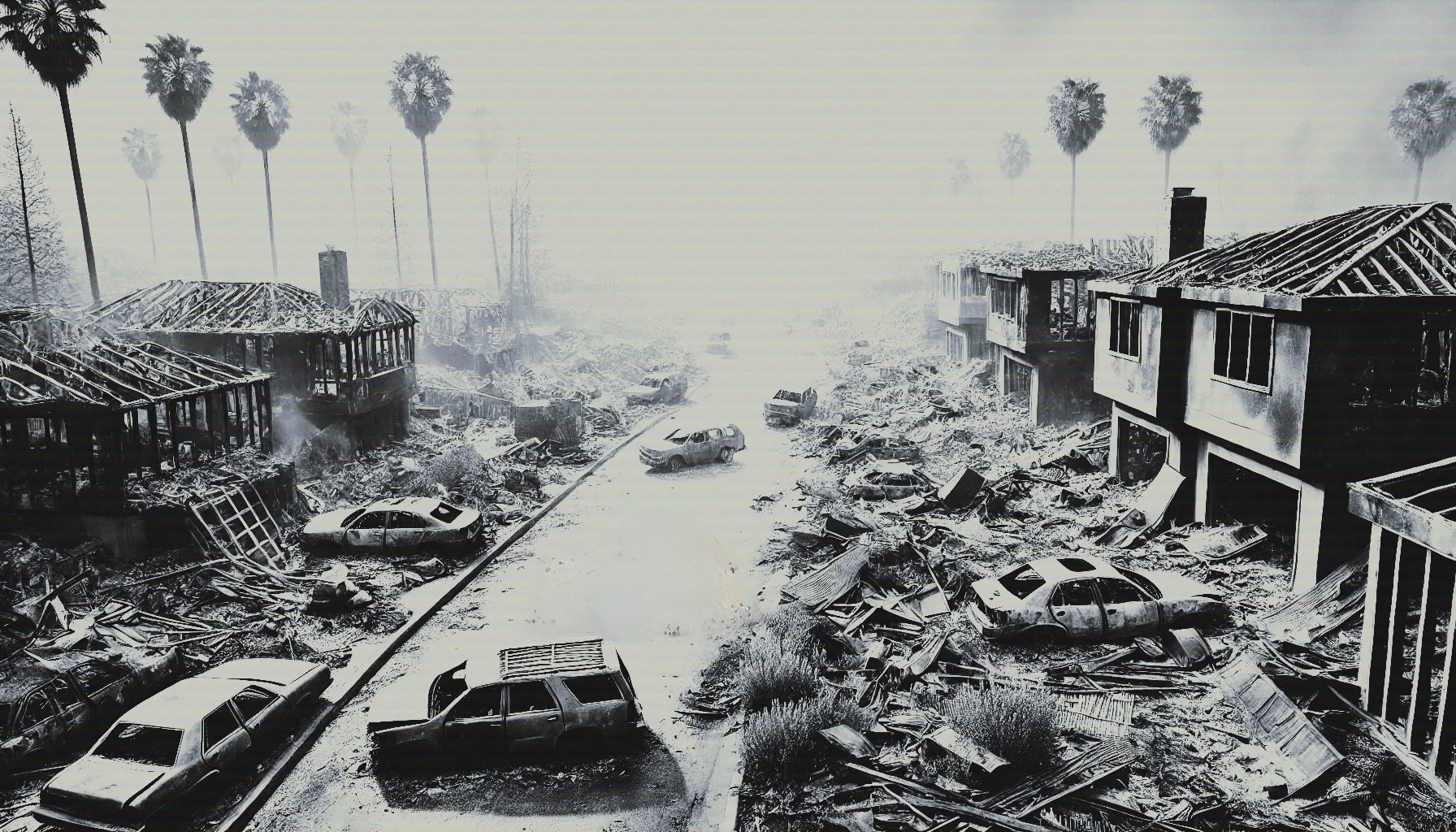
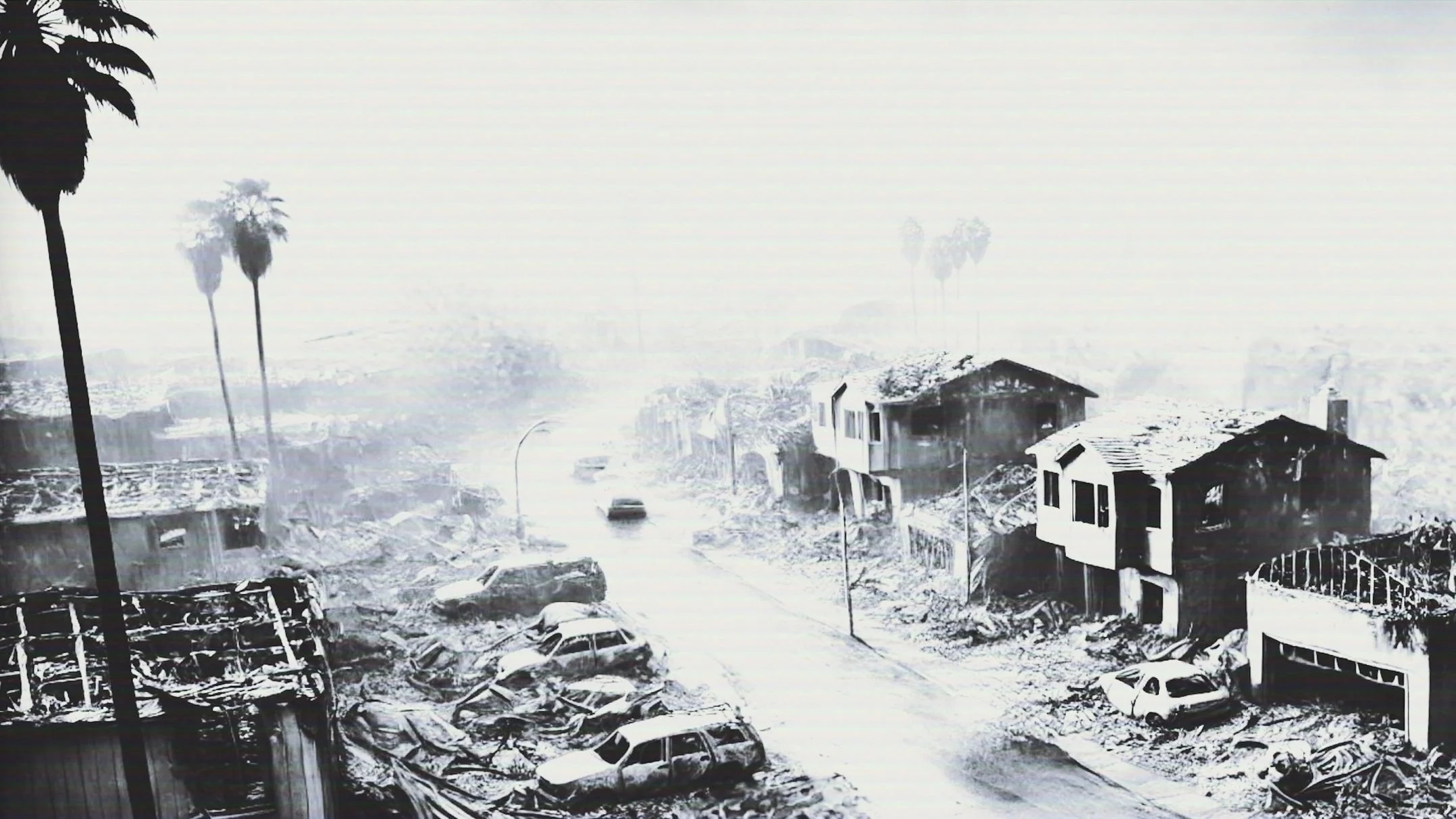
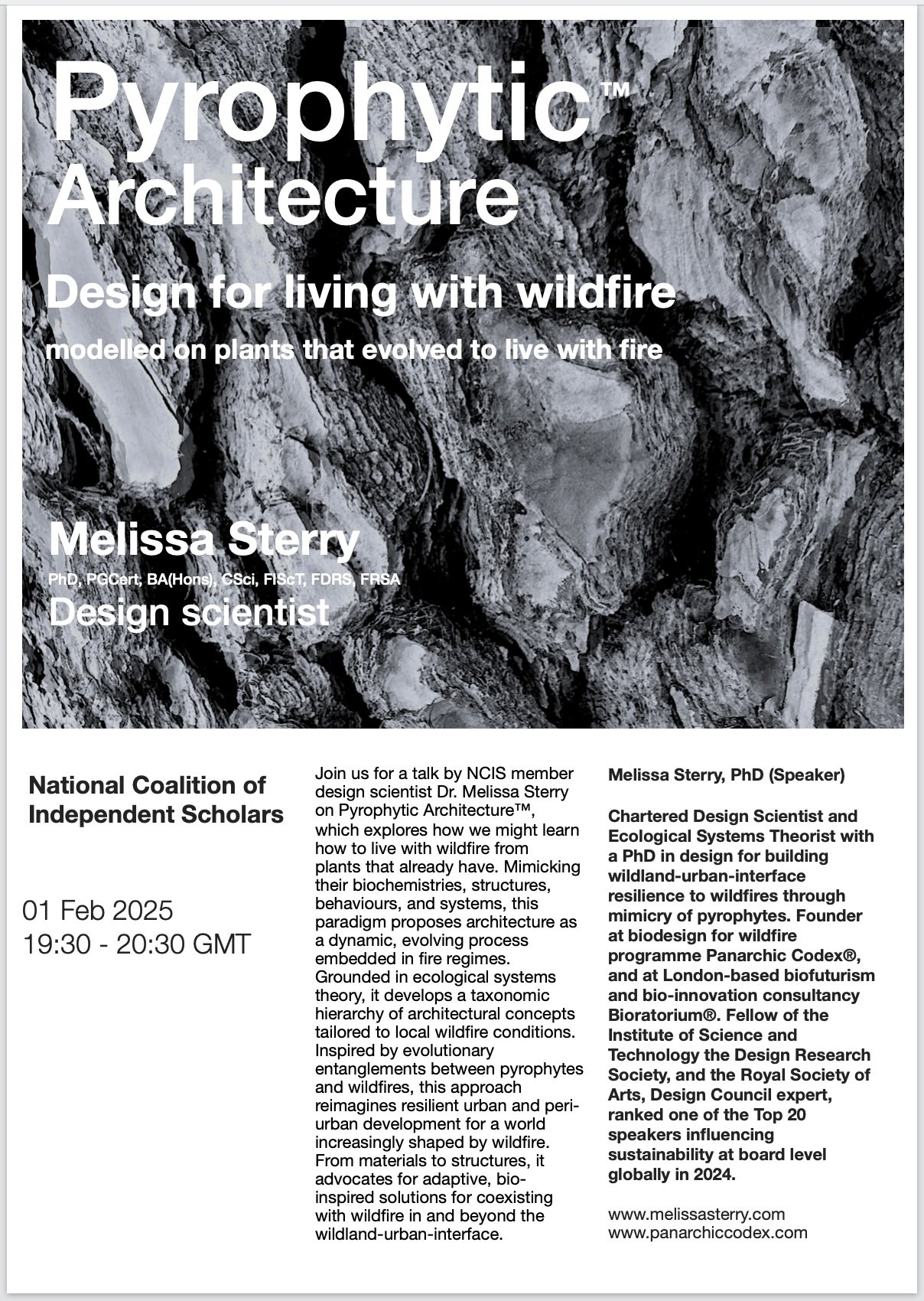
We invite architects, urban designers, planners, and real estate developers to join us in a pioneering initiative that reimagines Los Angeles through the principles of Pyrophytic Architecture™ — a design philosophy that synchronises and synthesises with the region’s natural fire ecology.


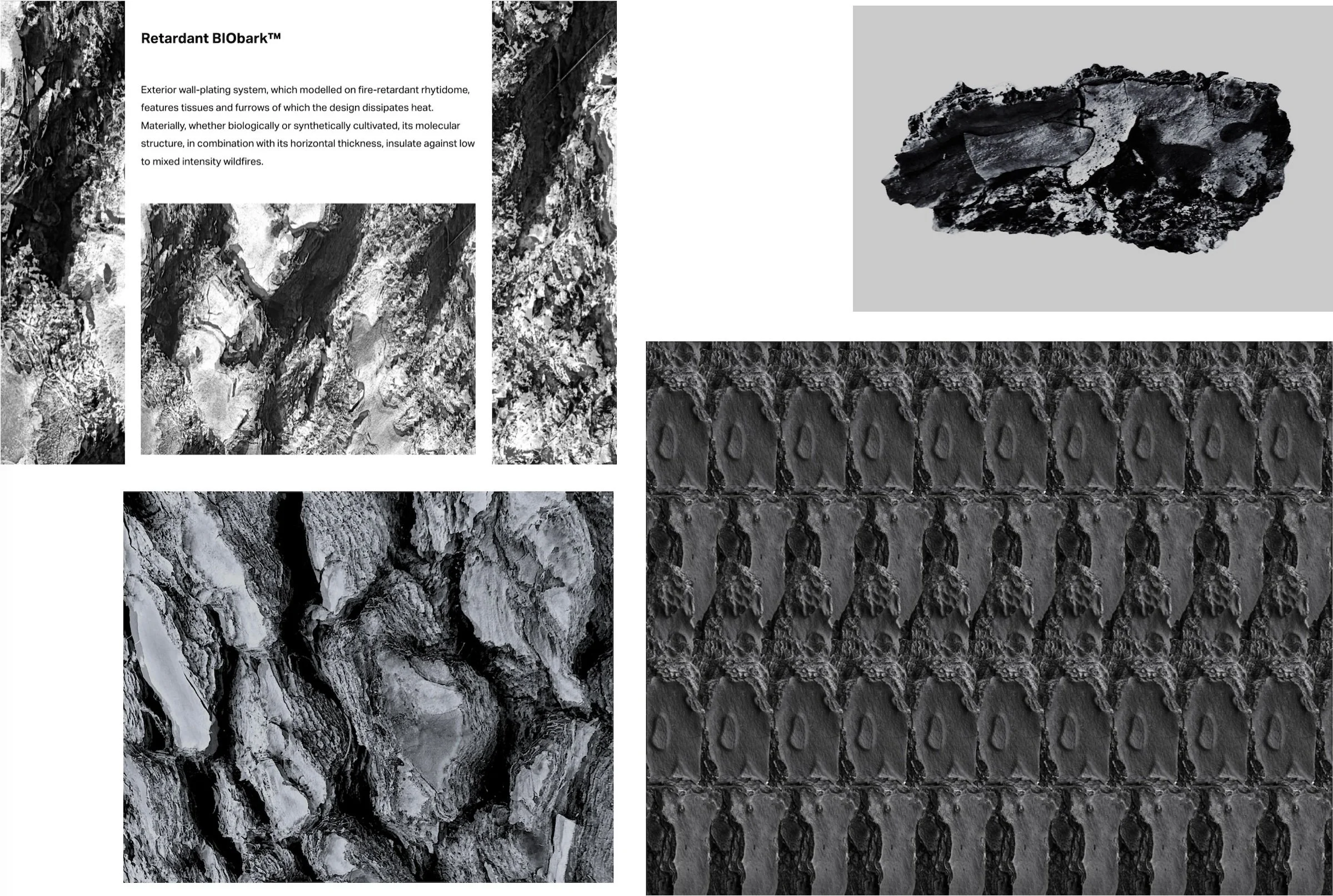
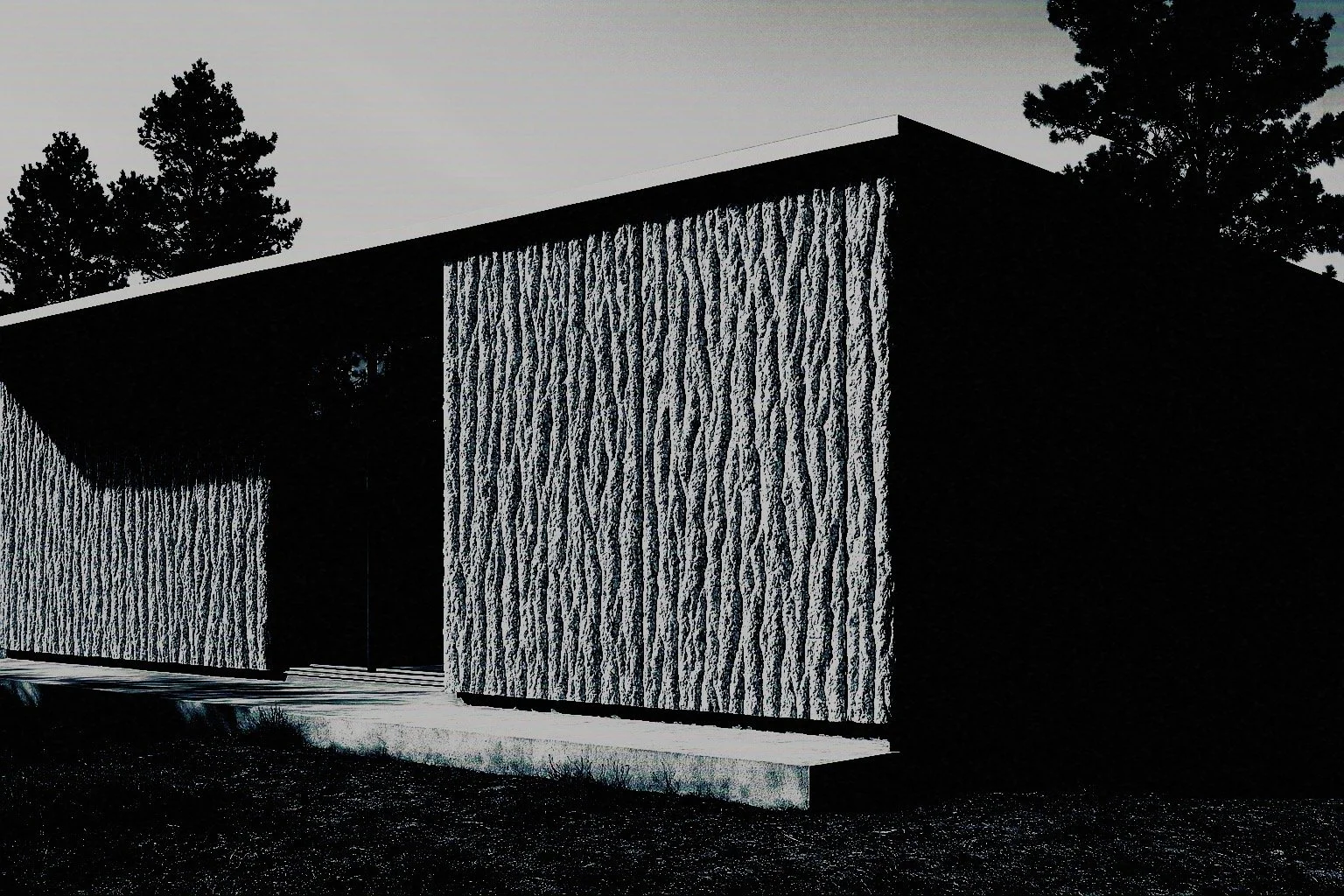
Dr. Sterry’s seminal concept Retardant BIObark™ - a bio-inspired wildfire resilience exterior cladding system, from Panarchistic Architecture, 2018.
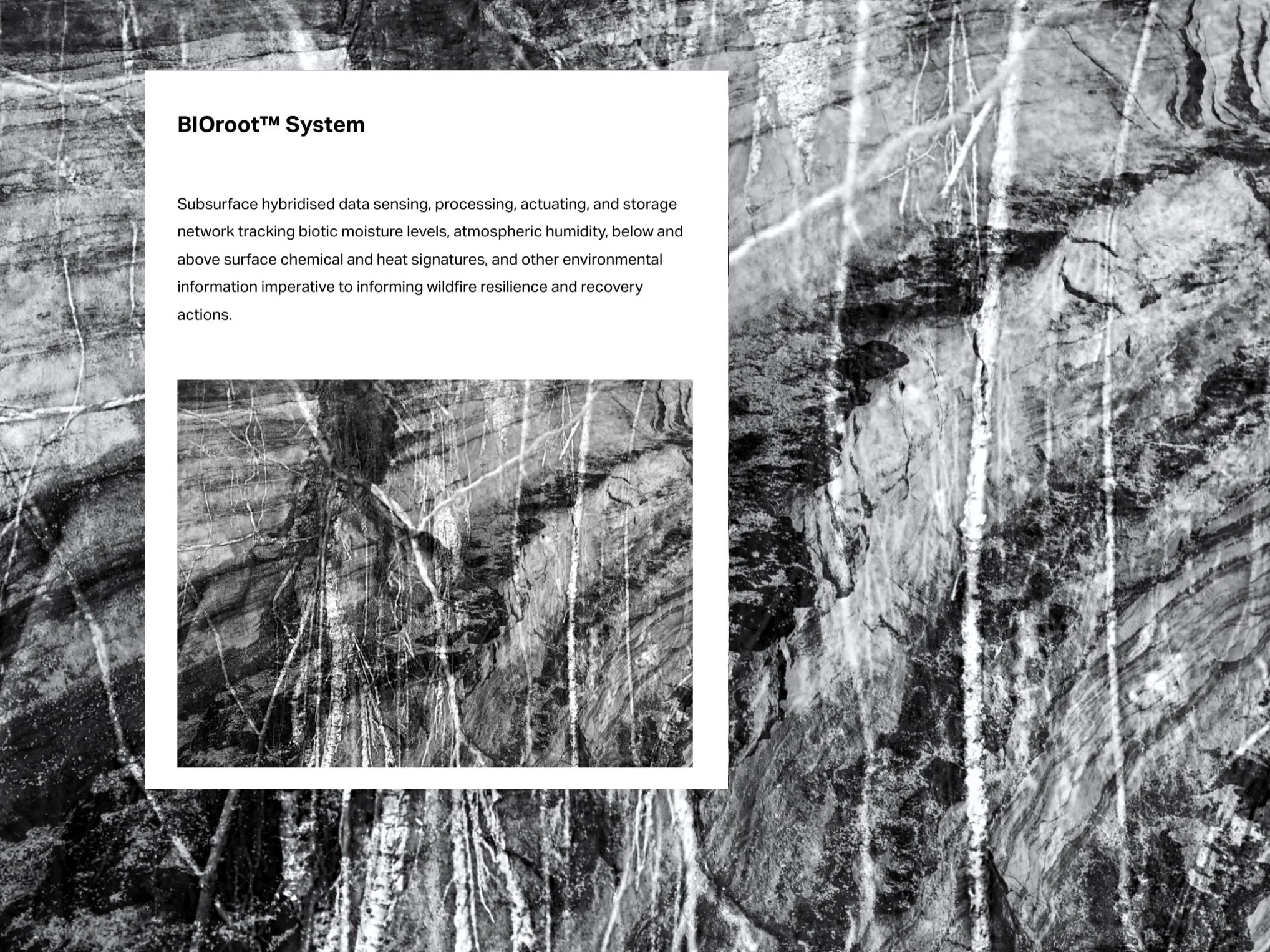
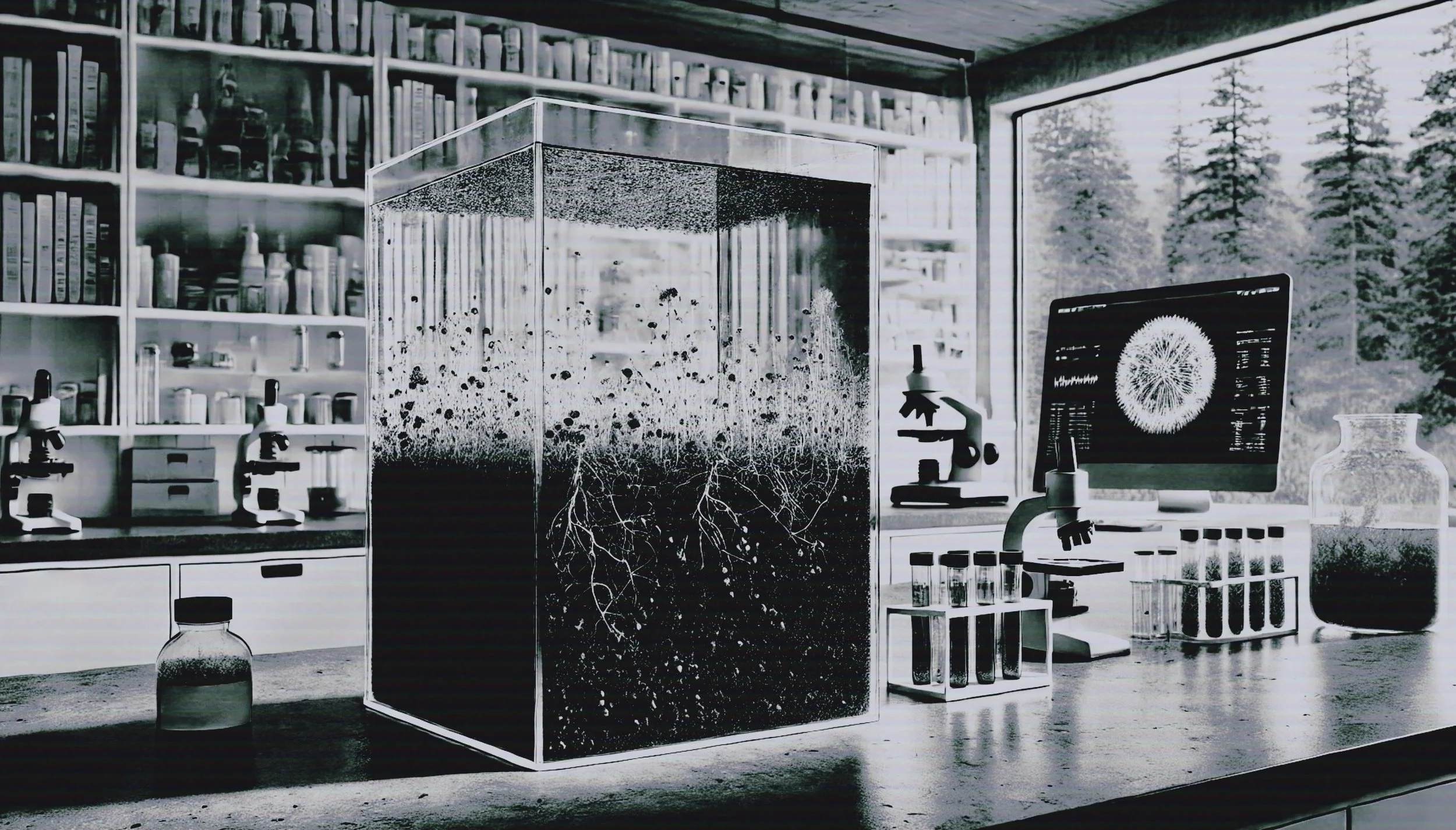
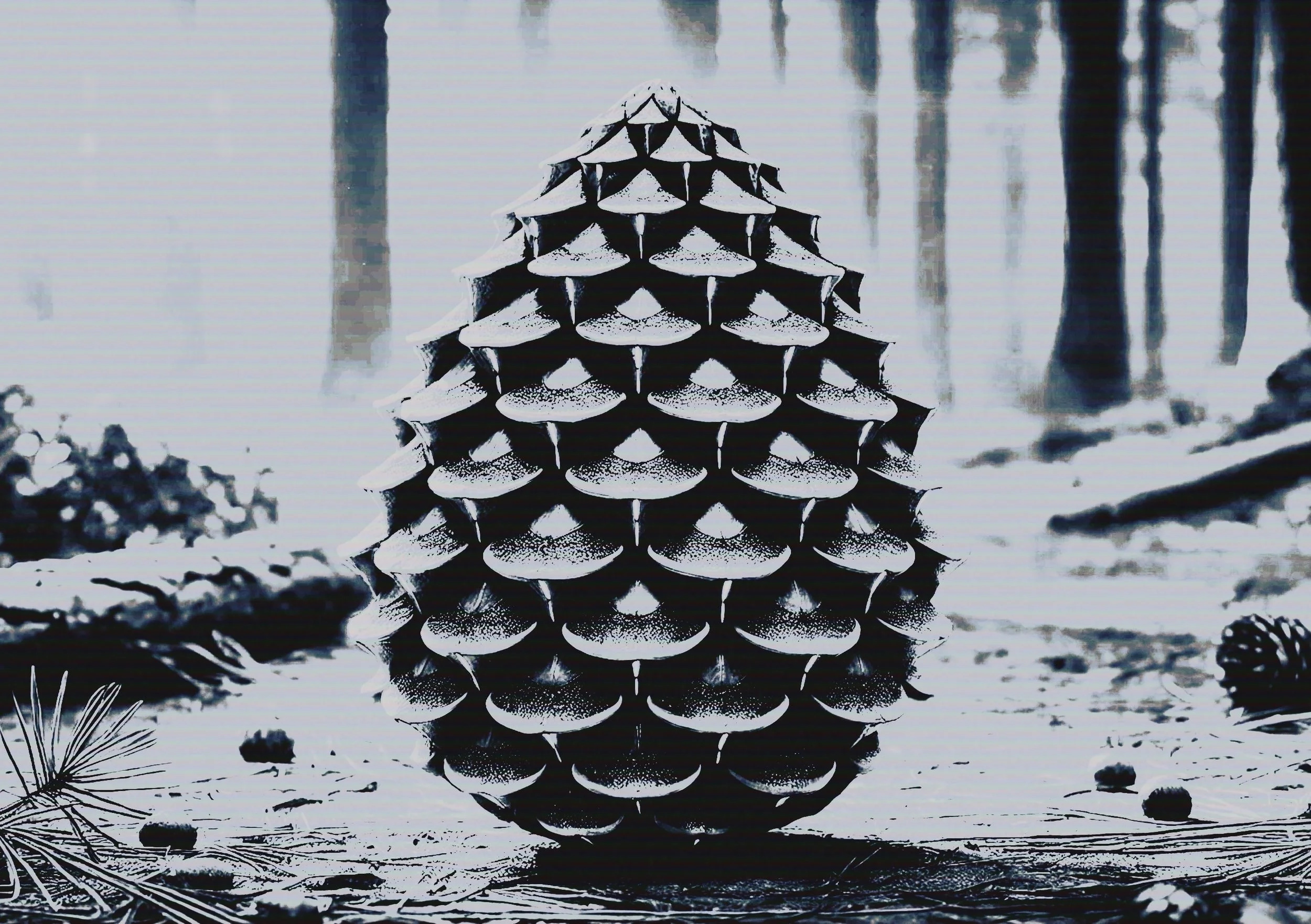
Sketches of early iterations of Dr. Sterry’s seminal bio-inspired wildfire sensing design concepts BIOroot System™ - a subterranean data sensing, processing, and storage network [above] which mimics the root systems of pyrophytic trees, and Pyri-CONE™ - an autonomous wildfire sensing, processing, and actuating component [right/below], which modelled on serotinous pinecones, identifies the heat and chemical signatures of wildfires and disseminates environmental data to the (B)IOT™ - a biotechnological internet of things - through a ballistic action triggered by the melting of resins that hold its exterior parts together. Both published in Panarchistic Architecture (2018), and in several more recent publications, these unprecedented biotechnologies are designed to enable the creation of a smart wildland urban interface which enables resilience to wildfires through a real-time hybridised information communications technology network connected to biomimetic architecture, infrastructure, and utilities, including the electric grid and water supplies.


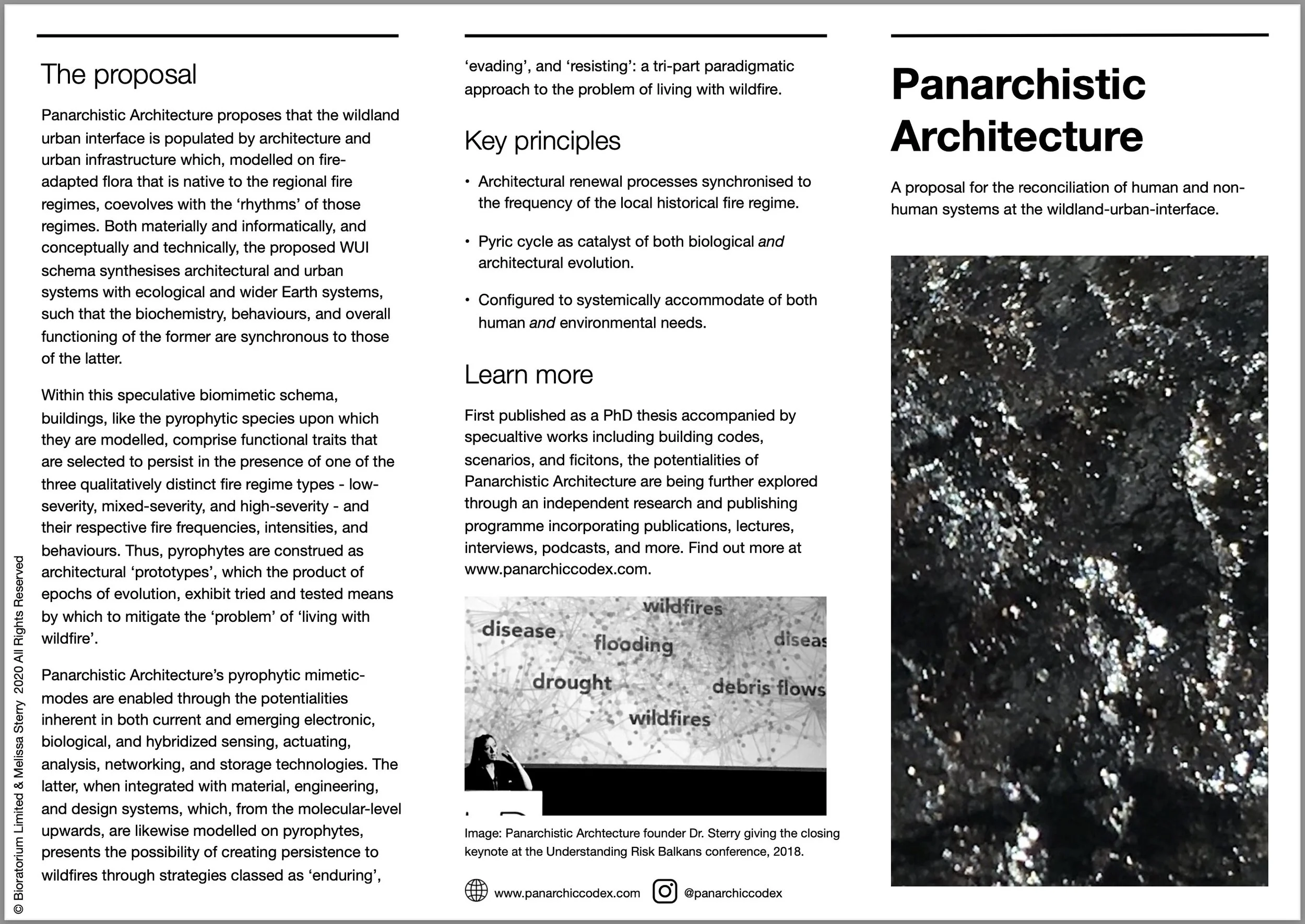
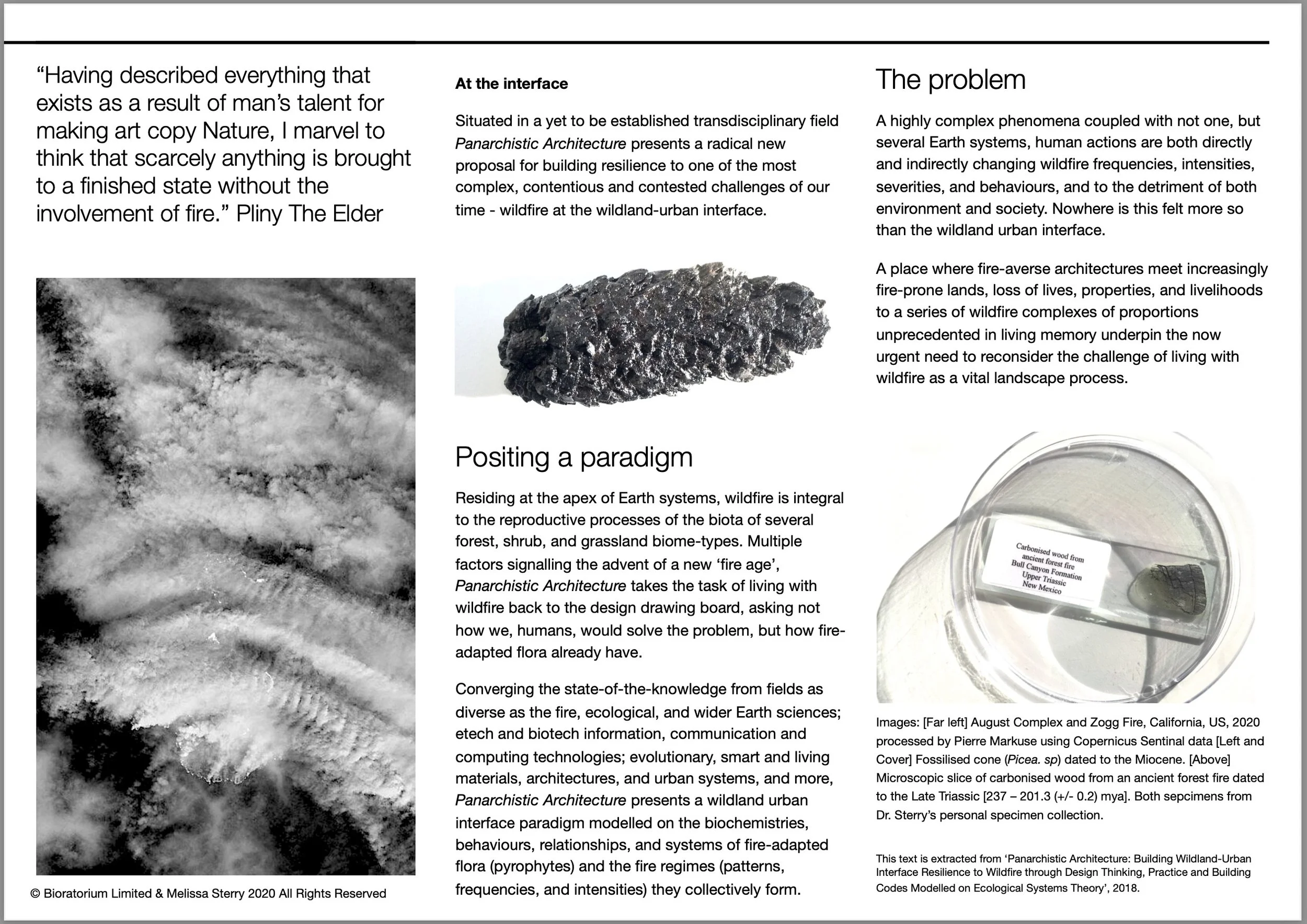
Paradigm
in pamphlets
Design for Wildfire school

A new school of nature-inspired design thought
Launching soon, Design for Wildfire school will offer a pioneering curriculum rooted in the ecology of pyrophytes — plants that have evolved to live with wildfire. Through a dynamic mix of virtual learning and immersive field experiences, students will explore innovative approaches to architectural and urban resilience. In collaboration with global experts and leading institutions, the school will provide a rare opportunity to reimagine our relationship with fire — designing with nature, not against it, to create a more resilient and regenerative future.
Led by founding director Melissa Sterry and co-director Gustavo Rincon, our new design school is set to cultivate the next generation of wildfire-resilient architectural, urban, planning, and policy thinkers and makers. Its core mission is to equip students with leading-edge skills, knowledge, and tools to address the highly complex challenges involved in designing for fire-prone environments.
Developing nature‑inspired design concepts and prototypes
Transdisciplinary research and bold experimentation in resilience thinking
Transformative design solutions for fire-prone cities and landscapes
Specialist resources, immersive fieldwork, and global knowledge exchange
… this is unapologetically innovative education and research for an age when knowledge needs to spread as fast as wildfire itself.

Lude cum ideis, non igne
Lude cum ideis, non igne
Play with ideas, not fire
Play with ideas, not fire
Nature-Inspired Design:
Our school draws on insights from ecosystems that thrive in fire-prone regions to inform resilient and regenerative design strategies for buildings, urban/peri-urban environments, and landscapes
Transdisciplinary Approach:
Our unprecedented curriculum integrates subjects including fire ecology and the wider fire sciences with architecture, urban design, planning, and policymaking for fire-prone places.
Pyrophytic Architecture™:
Developed by Melissa Sterry, this framework guides the design process through the study of fire-adapted species and systems that have evolved to coexist with wildfire and its cycles.
Radical Experimenation:
Playing with ideas, not fire, as our school motto suggests, we encourage design that though firmly grounded in cutting-edge science, is nonetheless highly experimental and original.
Blended Learning:
Our programmes offer both virtual and pop-up lectures, masterclasses, workshops, field trips, design experiments, collaborative projects, and curated studies.
Global Partnerships:
Our school is partnering with world leading international research institutions, universities, startups and industry experts to drive design innovation and facilitate knowledge exchange.

Join our journey…


support
support
our school
our school



Beyond Resilience, Into Sentience
Ultra Resilientiam, In Sentientiam
Ultra Resilientiam, In Sentientiam

A hybrid of virtual research studio meets nomadic field laboratory, the Firescape Lab™ is the experimental arm of the Design for Wildfire school. Our projects span speculative bio-inspired architectural prototypes; biomimetic sensing, computing and other information technologies; biomaterial innovation; digital simulation and experimental modelling; and other research works situated at the interface of living and non-living biotic, abiotic, and human systems in and beyond the fire-prone places of the world. These collaborations foster a new frontier in wildfire praxis that draws on fire‑adapted ecological systems to shape built environments that go beyond resilience - and into sentience.
News & Updates
News & Updates
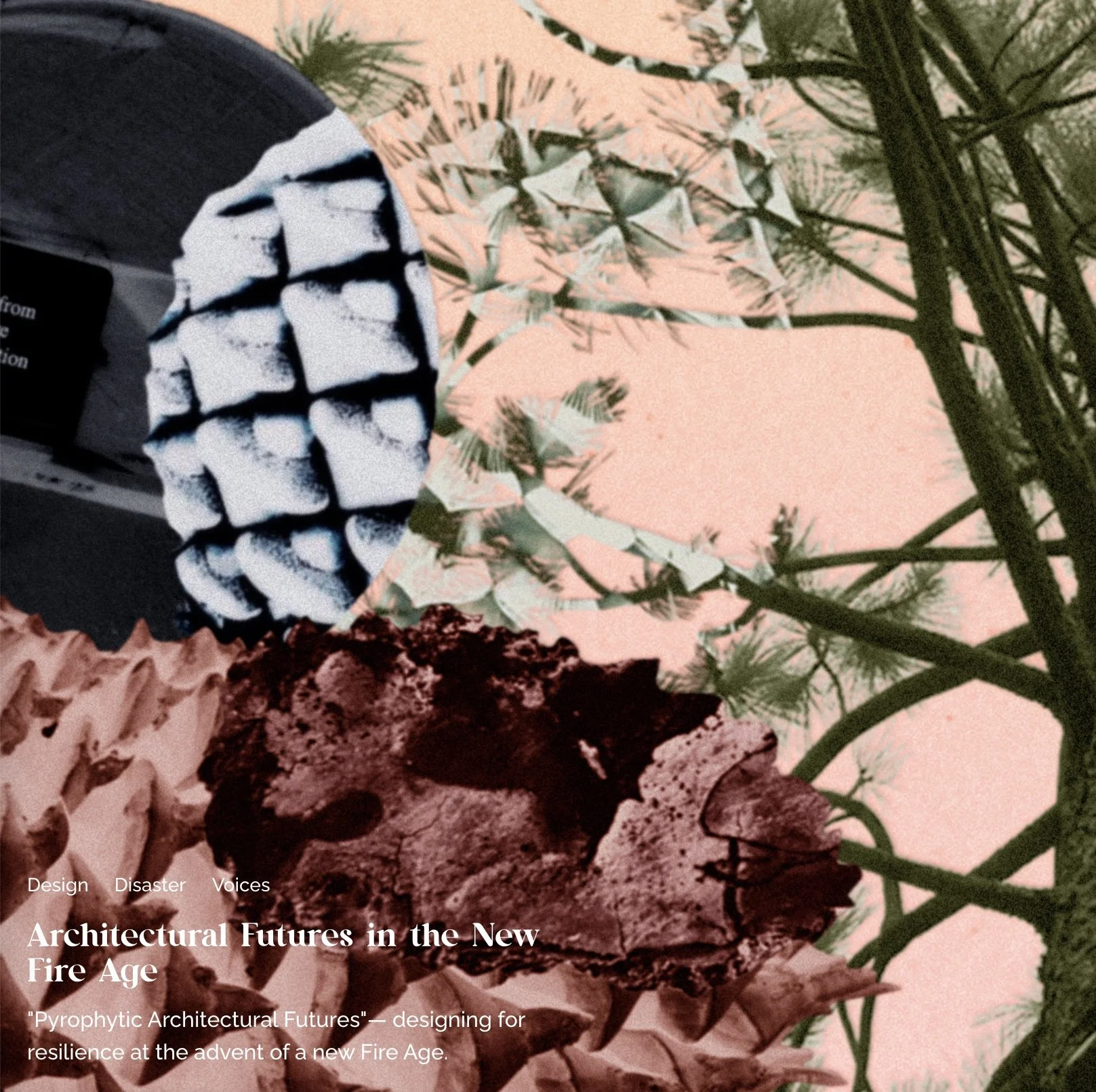

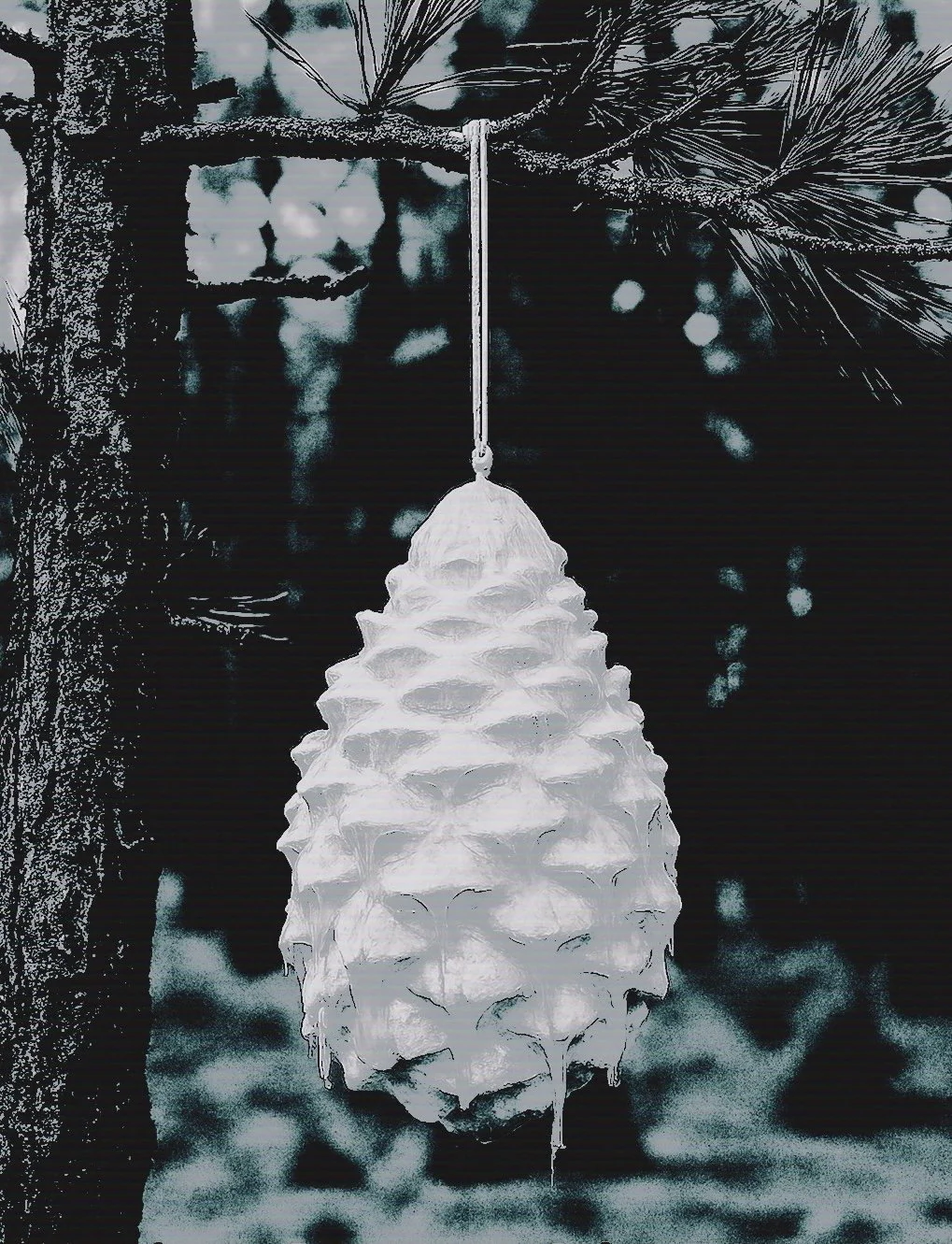


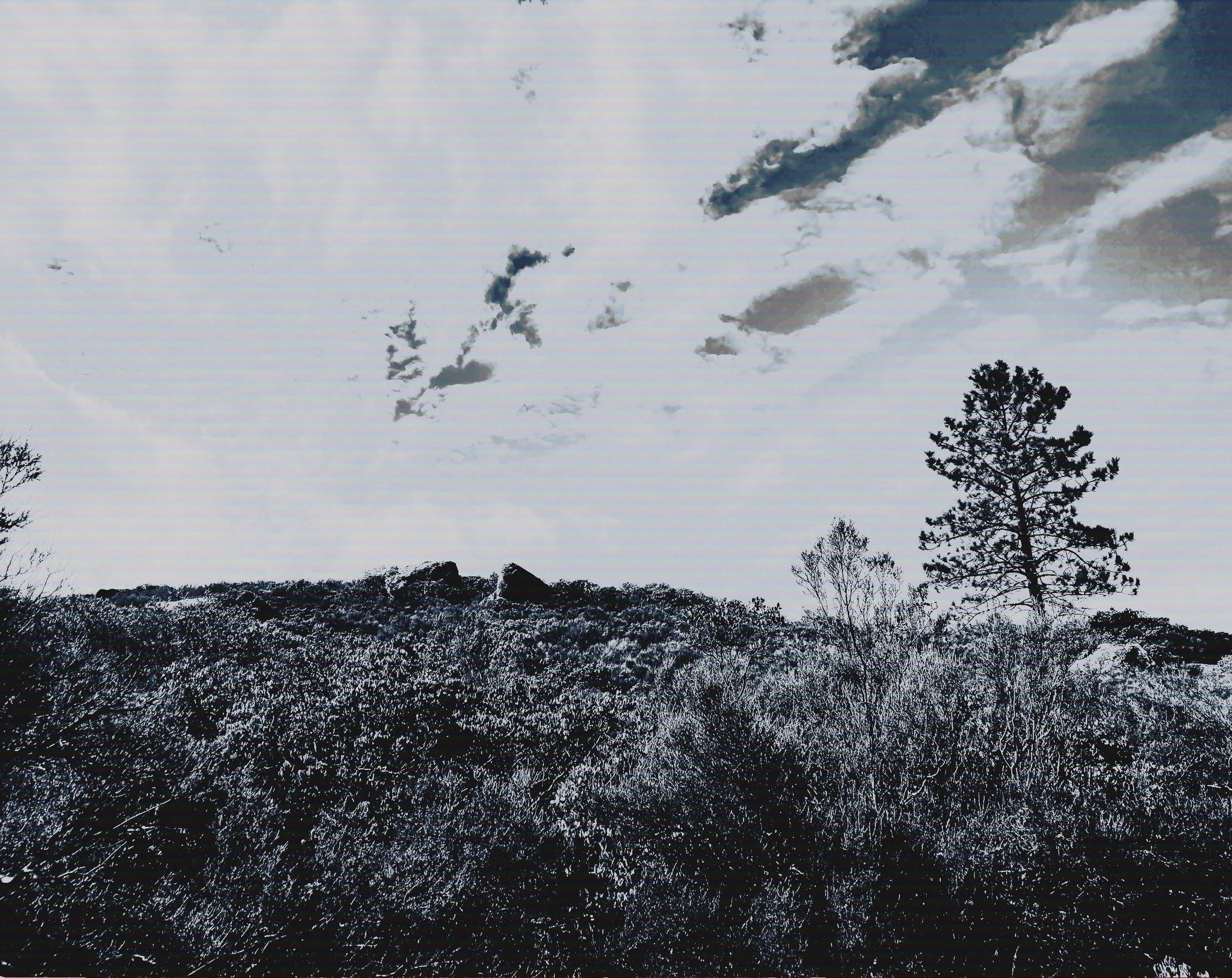

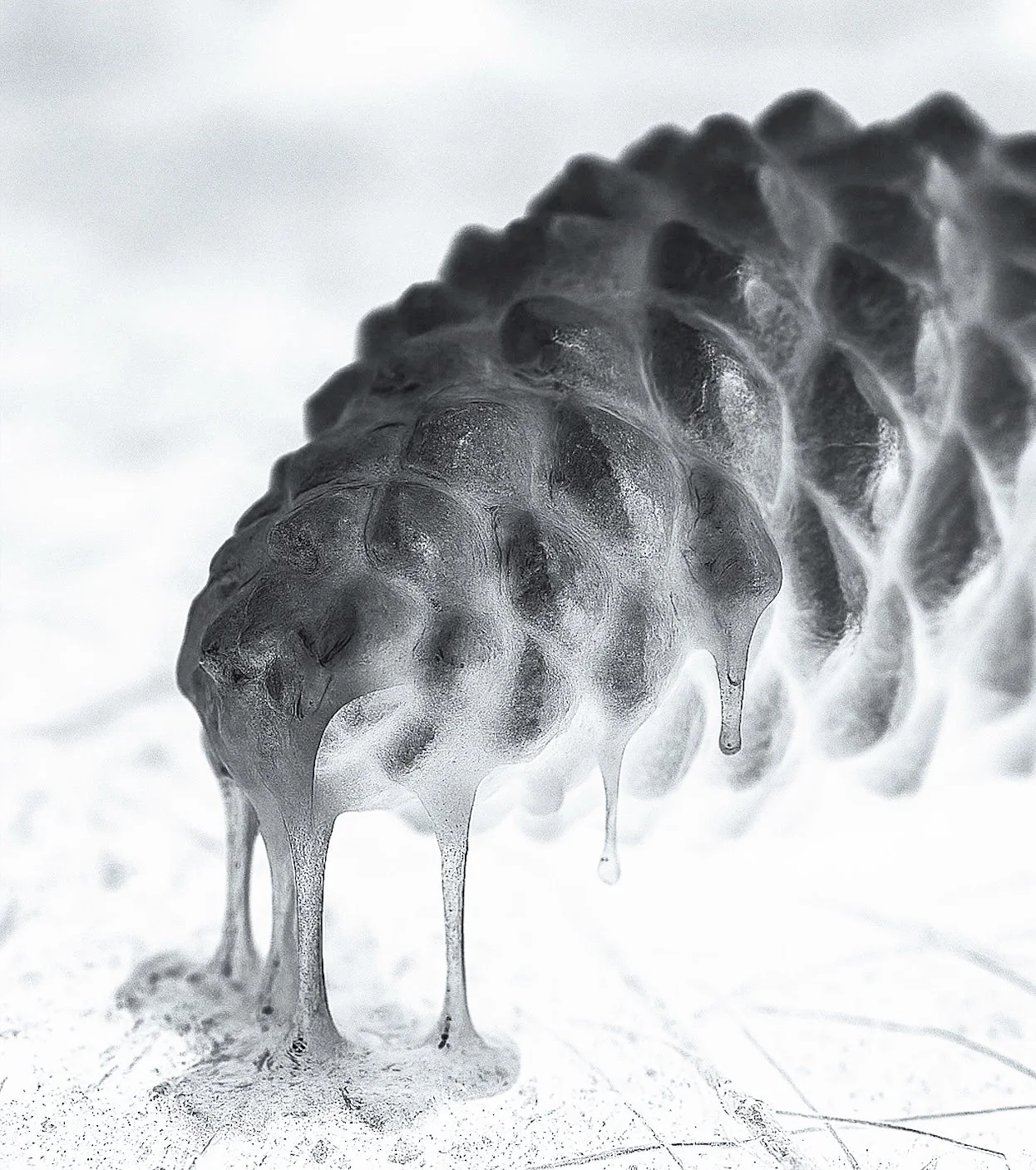


Images: (Top Left) Design for Wildfire school (Left) Fossilised cone (Picea. sp) found in a coal deposit in Konin, Poland and dated to the Miocene (23.03 - 5.333 mya) from Dr. Sterry’s specimen collection; (Above) Design for Wildfire school uniform; (Above Right) Design for Wildfire Substack; (Left) Dr. Sterry’s Pyri-CONE™ covered in its binding agent Synthetic Serotinous Substance; and (Below) illustration of her Retardant BIObark™ wall plating system on a WUI home.






In Print in 2026
In Print in 2026
Introducing Melissa Sterry
A British chartered scientist and design researcher, Melissa Sterry is world renowned for her work on wildfire resilience and nature-inspired innovation. With a PhD in designing architectural and urban systems for coexistence with wildfire, she developed the Panarchistic Architecture paradigm, which draws on fire ecology and systems science to inform resilient design in fire-prone regions. As founder of the Panarchic Codex® research and publishing platform and adviser to international agencies and industry, she synthesises science, biomimetics and complex systems theory to help shape regenerative architecture, planning and policy.
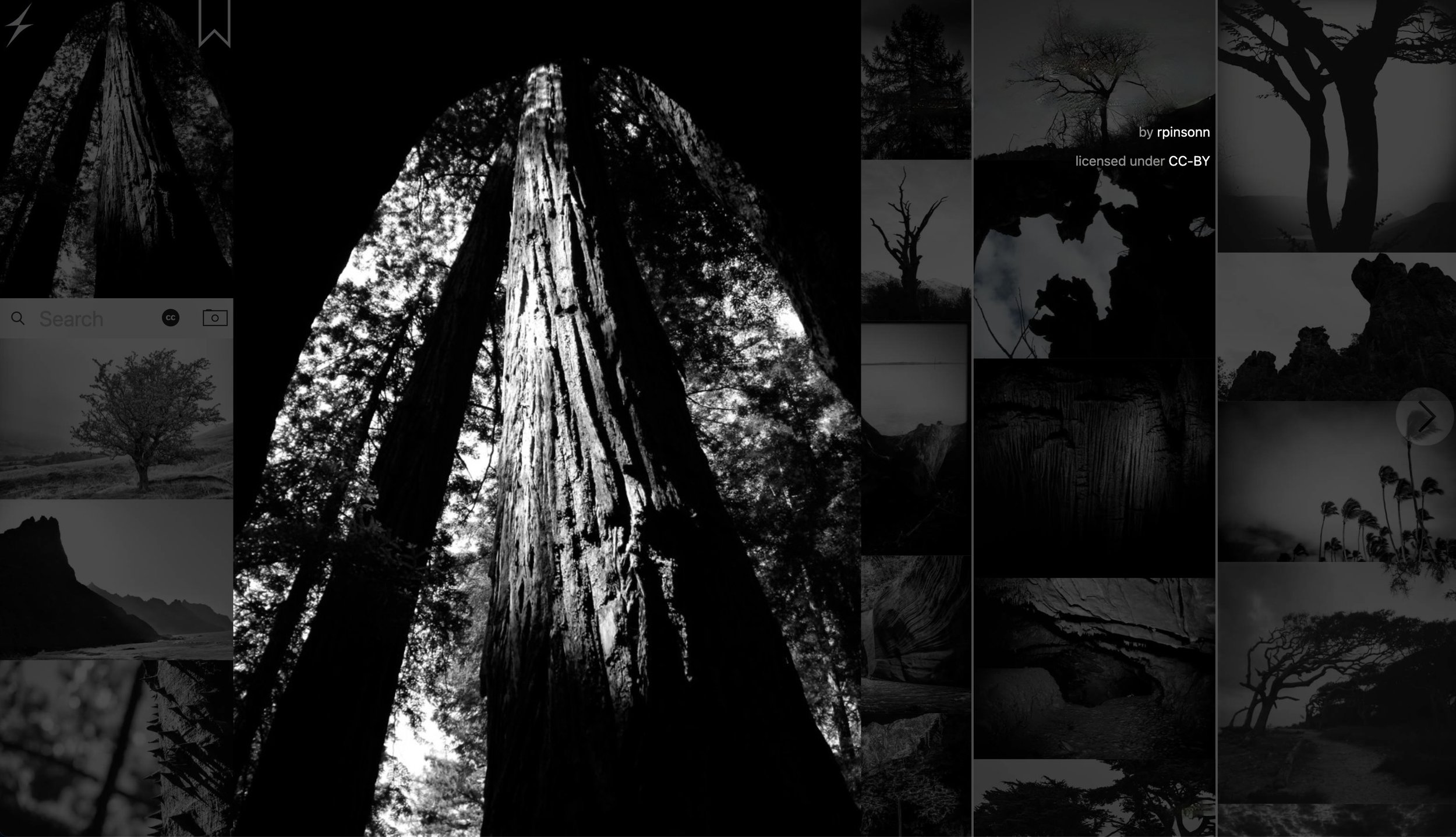
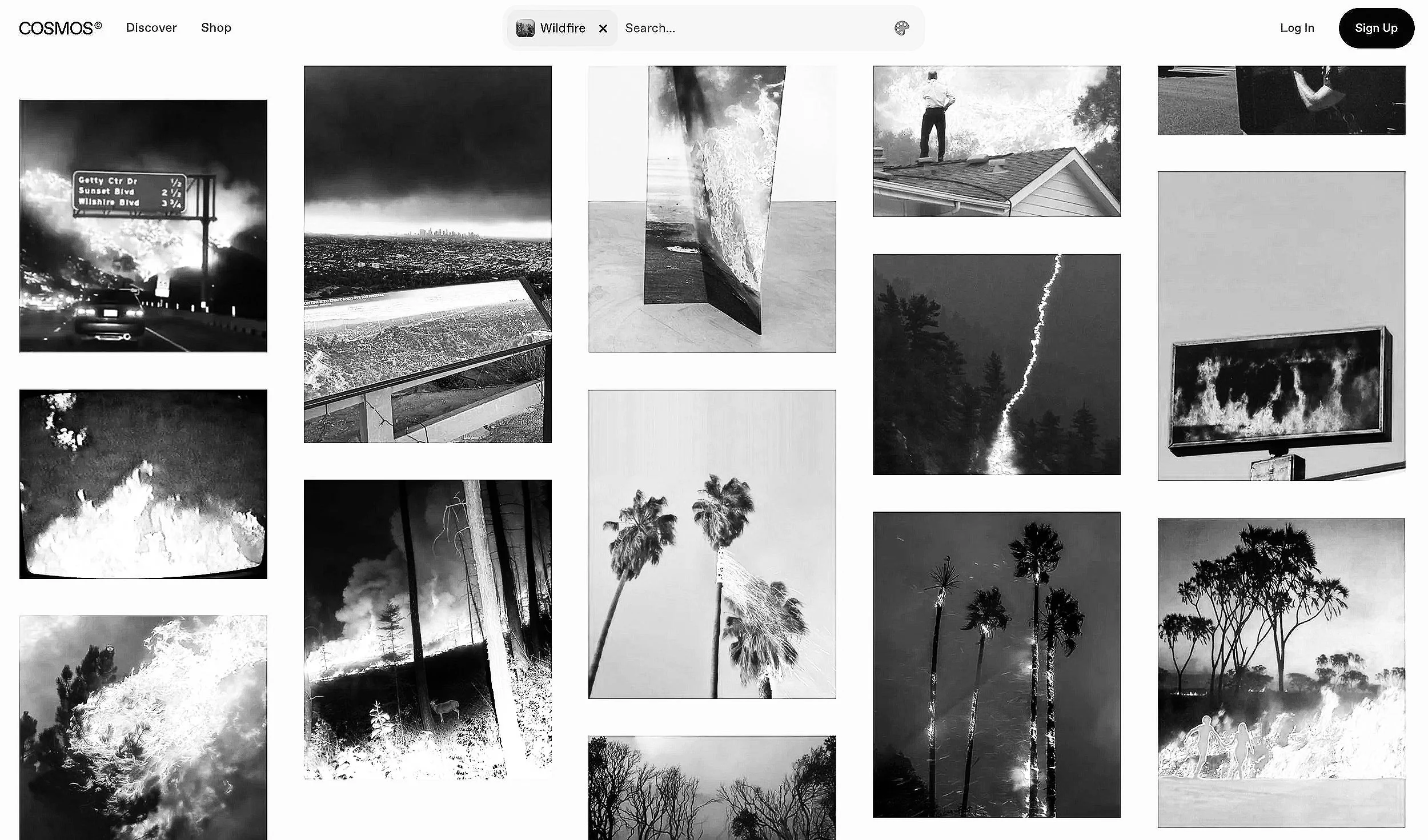
Storyboards on Same.Energy (left) and Cosmos (right).
Keynotes + Workshops
Keynotes + Workshops
Dr. Melissa Sterry is a globally recognised ecological design scientist and systems thinker whose Design for Wildfire talks transform how organisations approach living with fire. Rooted in her pioneering research that melds fire ecology, biomimicry and adaptive systems, her presentations energise architects, planners, developers, policymakers, insurers and real-estate professionals with bold, nature-inspired strategies for resilience.
Her talks span wildfire dynamics and ecology, designing architectural resilience to extreme wildfires, and how lessons from fire-adapted species can inform urban and peri-urban planning. Dr. Sterry explores cutting-edge innovations in fire-smart architecture, self-repairing biomimetic materials, regenerative urbanism, and future-proof real-estate development. Other sessions delve into systems thinking for designing wildfire-adapted communities, integrating fire ecology with urban design, and nature-inspired solutions for hazard preparedness and recovery.
Delivered online or in-person, individually or as part of a series, her talks can be complemented with tailored workshops, bespoke reports and multimedia educational programmes, all designed to spark fresh perspectives and equip teams with actionable insight. Whether you’re seeking to inform leadership, inspire your workforce, or educate stakeholders, Dr. Sterry’s engaging, research-driven presentations illuminate a visionary, nature-aligned path for coexisting with wildfire in a changing world.
Insights
Expert
Insights Expert
Interviews
Briefings
Interviews Briefings
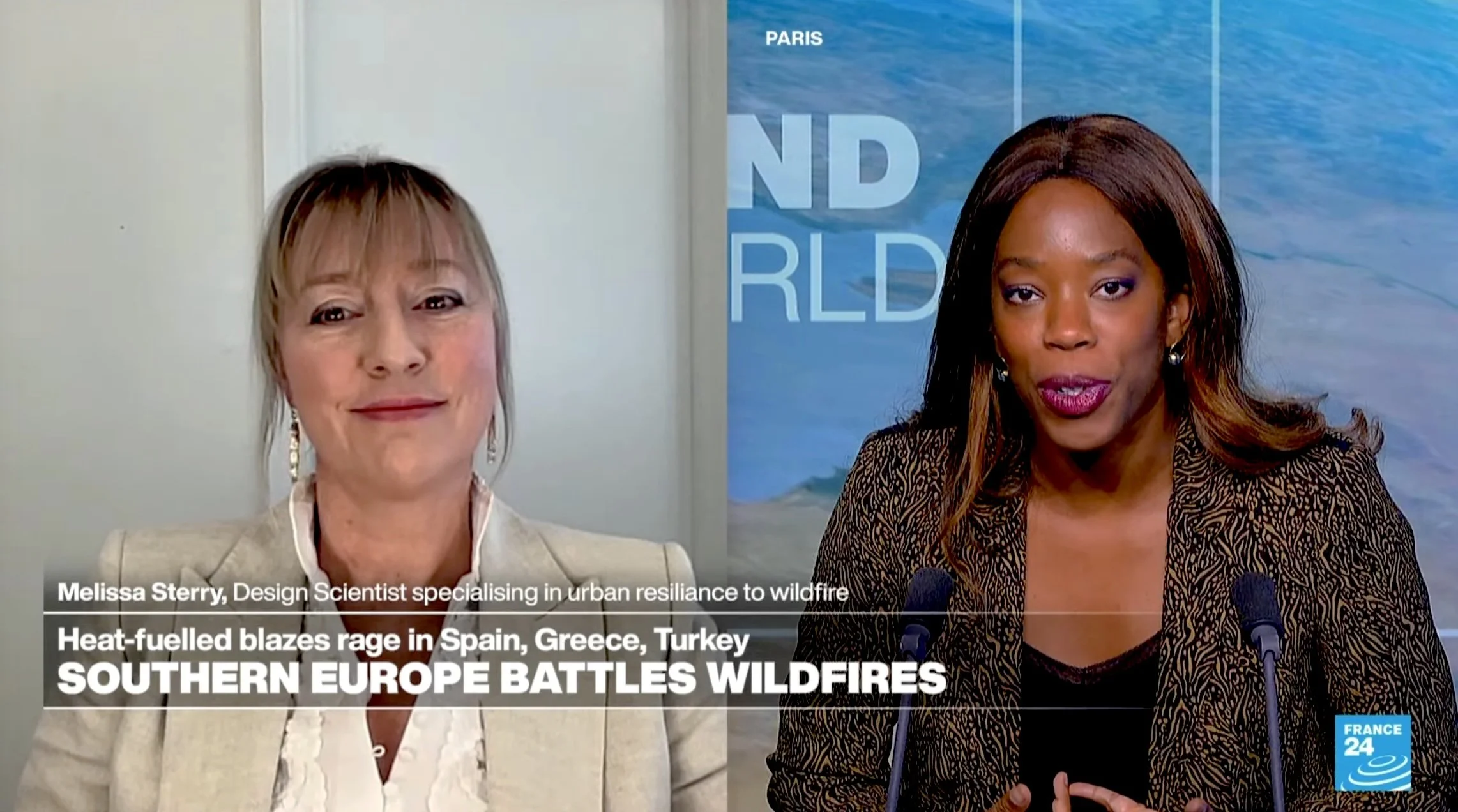
Dr. Sterry is available for interviews with news stations, documentary productions, newspapers and specialist publications seeking authoritative insight on wildfire resilience, biomimetic design, climate adaptation, urban planning and systems thinking. Her engaging communication style, coupled with rigorous research, makes her ideal for expert commentary, live discussions and feature interviews. Contact us to arrange interviews, briefings or expert contributions that will inform and elevate coverage on wildfire-related issues.
Reading matter
Learn more about wildfire, fire ecology, and design for wildfire.
Learn more about wildfire, fire ecology, and design for wildfire.
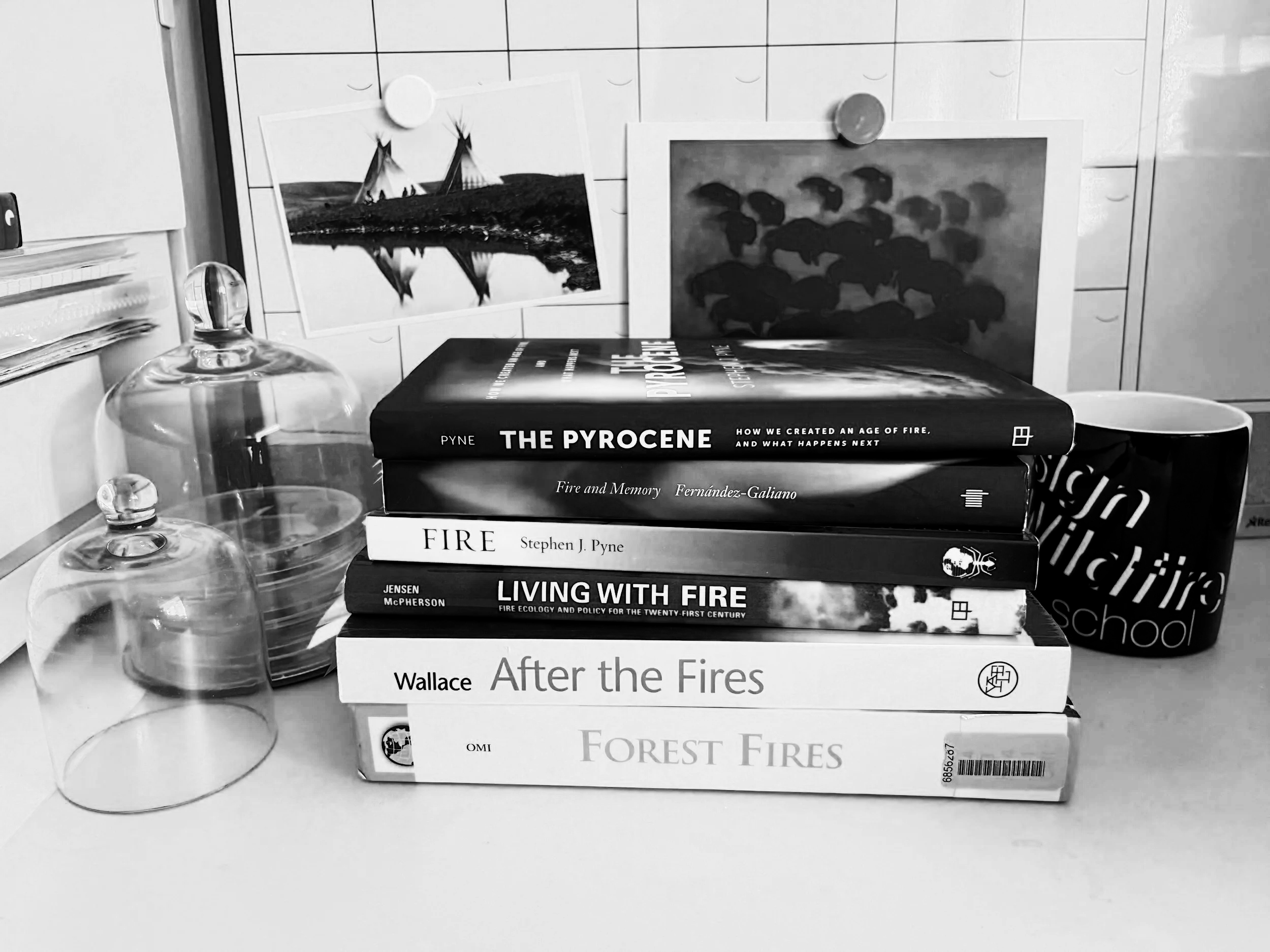
Academic
Design for Wildfire in The Routledge Companion to Ecological Design Thinking (2022)
Design for Wildfire in The Routledge Companion to Ecological Design Thinking (2022)
Panarchistic Architecture in The Routledge Companion to Smart Design Thinking (2023).
Panarchistic Architecture in The Routledge Companion to Smart Design Thinking (2023).




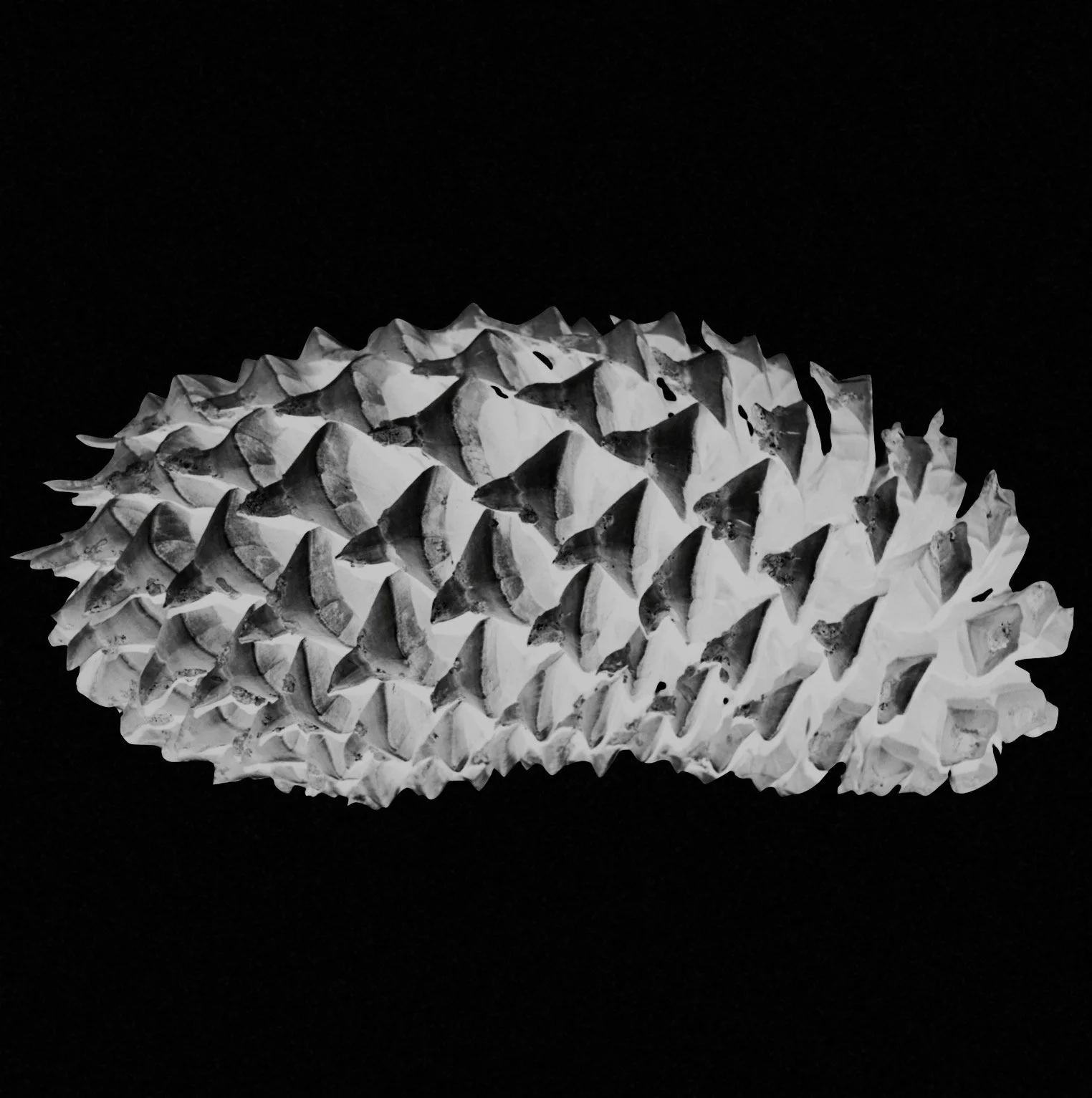
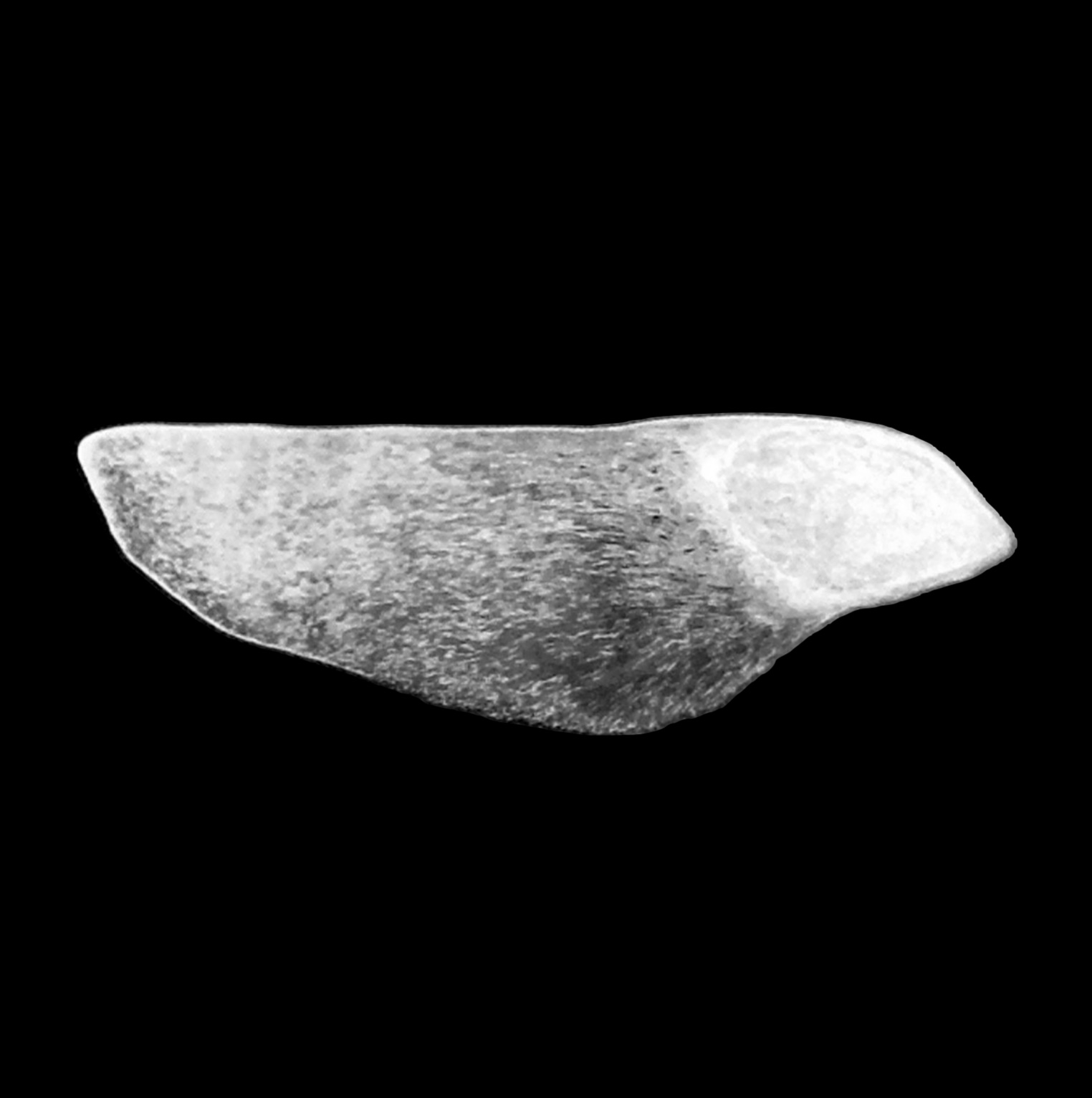

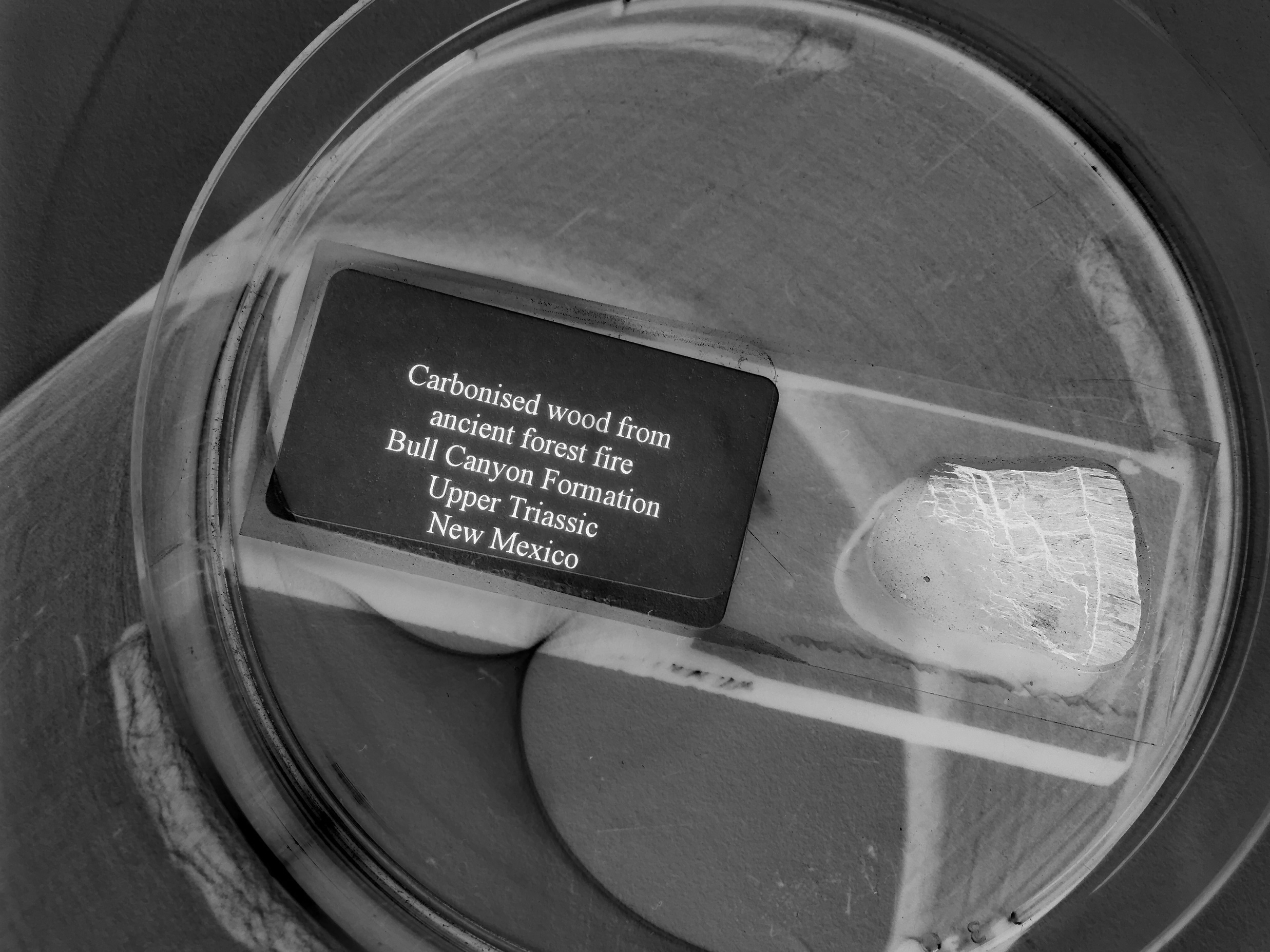
Specimens from Dr. Sterry’s extant and extinct pyrophyte collection, including a Coulter pine (Pinus coulteri) cone measuring 19.5 inches in length, which she collected near Julian, San Diego County, California in 1997 (pictured top left), as well as a fusain (fossilised charcoal) from the Upper Triassic (above).
Dr. Melissa Sterry explains why the visuals arts are critical in communicating why now is the critical moment to rethink how we live, design, and build in fire-prone landscapes.